
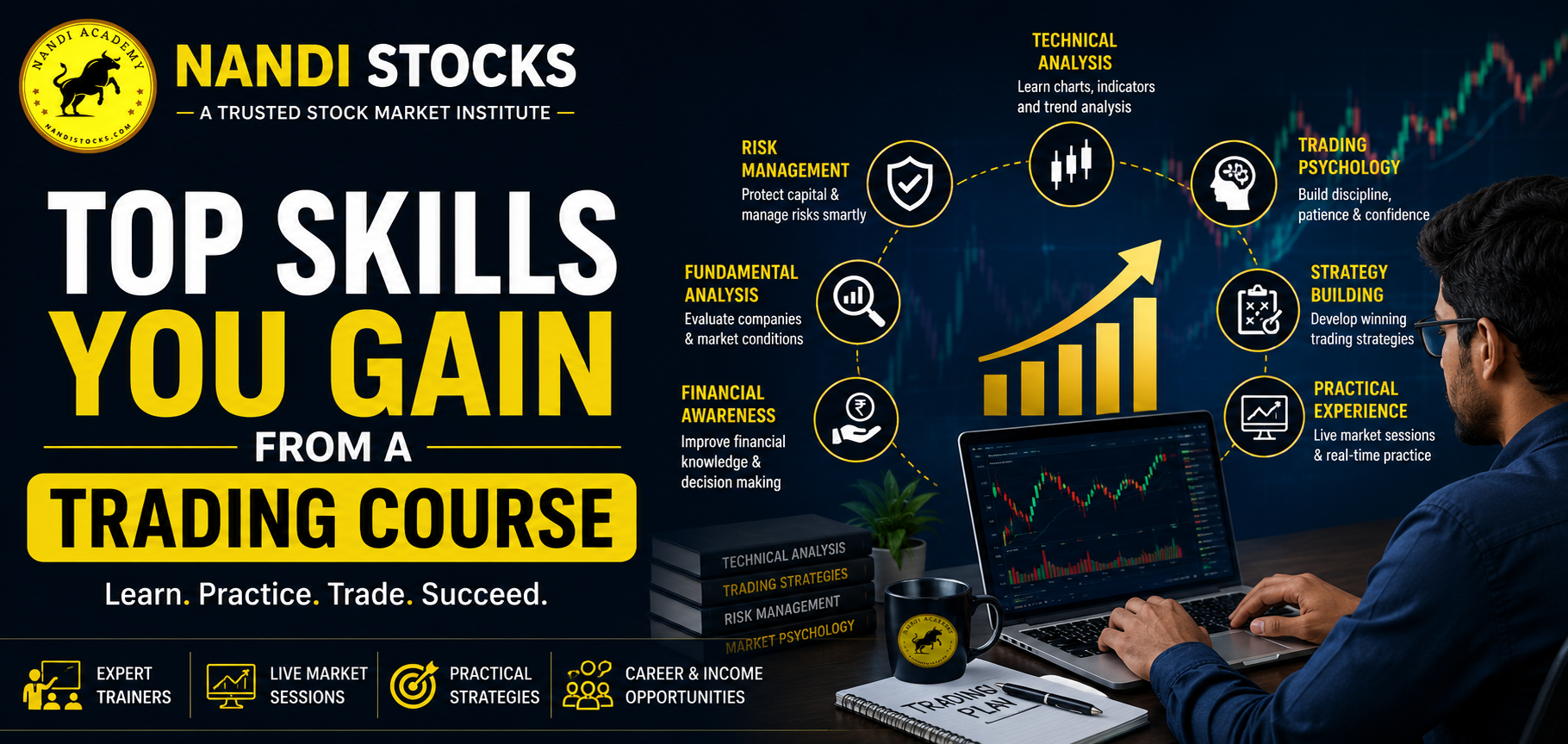
The stock market is becoming one of the most popular career and investment options in India. Whether you are a student, working professional, entrepreneur, or someone looking for financial independence, learning trading can open new opportunities. However, successful trading is not just about buying and selling stocks. It requires knowledge, discipline, strategy, and practical skills.
Joining a professional trading course helps individuals understand the market in a structured and practical way. A well-designed stock market course not only teaches technical concepts but also helps develop important skills that can improve decision-making and financial understanding.
Here are the top skills you gain from a trading course.
1. Understanding of Stock Market Basics
One of the first skills you develop is understanding how the stock market works. A trading course teaches:
- How stock exchanges operate
- What are stocks, indices, and sectors
- Difference between trading and investing
- Basics of NSE and BSE
- Market participants and their roles
This foundational knowledge helps beginners feel more confident while entering the market.
2. Technical Analysis Skills
Technical analysis is one of the most important parts of trading. In a trading course, students learn how to:
- Read stock charts
- Understand candlestick patterns
- Identify trends and momentum
- Use indicators like RSI, MACD, and Moving Averages
- Find support and resistance levels
These skills help traders analyze market movements and make informed trading decisions.
3. Risk Management Techniques
Professional traders focus heavily on risk management. A trading course teaches how to:
- Use stop loss effectively
- Manage capital wisely
- Control losses during volatile markets
- Avoid overtrading
- Maintain proper risk-reward ratio
Learning risk management is essential for long-term survival in the stock market.
4. Decision-Making Ability
Trading requires quick and logical decisions. A trading course trains individuals to:
- Analyze market conditions
- Identify entry and exit points
- Avoid emotional decisions
- Build trading confidence
- Follow a disciplined trading plan
Over time, this improves analytical thinking and decision-making skills.
5. Trading Psychology and Emotional Control
Many traders fail because of fear, greed, and emotional trading. A professional course helps students understand:
- Importance of patience and discipline
- How emotions affect trading
- Ways to control panic during market fluctuations
- Developing a trader’s mindset
Strong psychology is often considered more important than strategy in trading success.
6. Fundamental Analysis Knowledge
Apart from charts, traders also learn how to evaluate companies fundamentally. This includes:
- Reading financial statements
- Understanding company performance
- Studying market news and economic factors
- Evaluating long-term investment opportunities
This skill is especially useful for investors and swing traders.
7. Practical Market Experience
Most professional trading institutes provide:
- Live market sessions
- Real-time chart analysis
- Practical trading examples
- Strategy implementation practice
Hands-on experience helps students understand real market behavior better than theoretical learning alone.
8. Financial Planning Awareness
A trading course also improves overall financial awareness. Students learn:
- Importance of savings and investments
- Portfolio management basics
- Wealth creation strategies
- Financial discipline
These skills are valuable not only for trading but also for personal financial growth.
9. Strategy Building Skills
Every trader needs a trading strategy that matches their goals and risk appetite. A trading course teaches how to:
- Build personalized trading setups
- Test strategies using historical data
- Identify high-probability trades
- Improve consistency in trading
With proper guidance, traders can develop systems that suit their trading style.
10. Career and Income Opportunities
Learning trading can also create career opportunities such as:
- Full-time trader
- Market analyst
- Investment advisor
- Portfolio manager
- Financial educator
Many people also use trading as a secondary source of income while continuing their jobs or businesses.
Conclusion
A professional trading course offers much more than basic stock market knowledge. It helps individuals develop analytical skills, emotional discipline, risk management techniques, and practical market understanding. With the right training and continuous practice, trading can become a valuable skill for financial growth and career development.
Choosing the right trading institute with practical learning and expert mentorship can make the journey smoother and more effective. Whether your goal is investing, trading, or improving financial knowledge, learning the stock market is a step toward smarter financial decisions.