
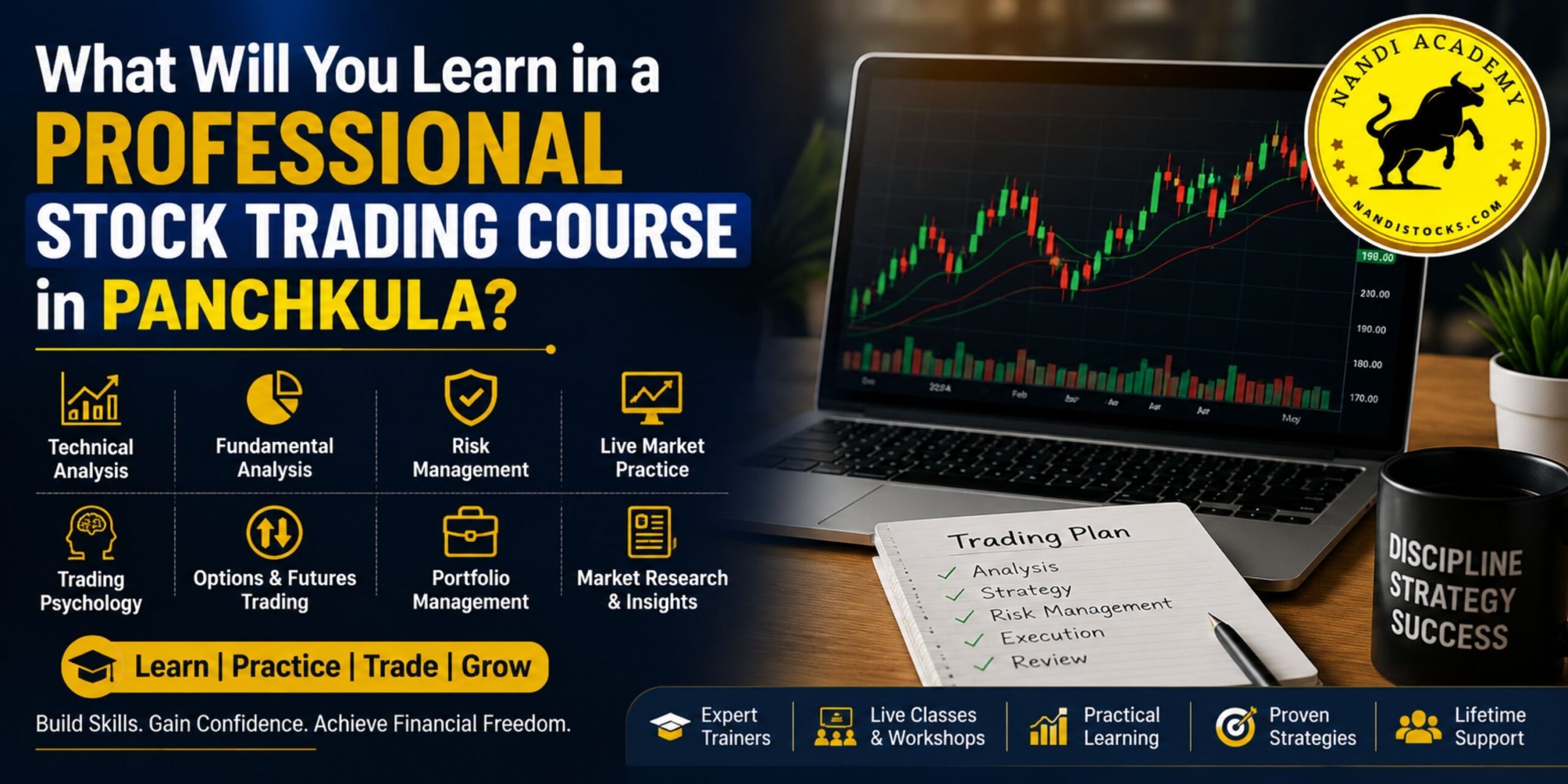
The stock market has become one of the most sought-after career and investment opportunities in India. With increasing participation from retail investors and the growing popularity of online trading platforms, more people are looking to gain professional knowledge before entering the financial markets. If you’re considering enrolling in a Stock Trading Course in Panchkula, you may be wondering what skills and knowledge you’ll actually gain.
A professional course goes far beyond teaching you how to buy and sell stocks. It equips you with practical trading strategies, risk management techniques, technical analysis skills, and the confidence to make informed investment decisions. Whether you’re a student, working professional, entrepreneur, or someone interested in creating an additional source of income, a structured stock trading program can help you build a strong foundation.
Understanding the Basics of the Stock Market
Every professional course begins with the fundamentals. Before learning advanced trading techniques, you’ll understand how the stock market functions.
You’ll learn about:
- Stock exchanges and how they operate
- Different market participants
- Equity shares and their importance
- IPOs and the primary market
- Secondary market trading
- Demat and Trading Accounts
- SEBI regulations and investor protection
A solid understanding of these concepts ensures that you know exactly how the financial markets work before risking your capital.
Technical Analysis
Technical analysis is one of the most valuable skills taught in a professional stock trading course. It helps traders identify buying and selling opportunities by studying price charts and market trends.
Topics generally include:
- Candlestick patterns
- Support and resistance
- Trend analysis
- Chart patterns
- Moving averages
- RSI (Relative Strength Index)
- MACD
- Bollinger Bands
- Volume analysis
Learning technical analysis enables traders to make decisions based on market data instead of emotions.
Fundamental Analysis
While technical analysis focuses on price movements, fundamental analysis helps determine whether a company is financially strong.
Students learn how to evaluate:
- Company financial statements
- Balance sheets
- Profit & Loss statements
- Cash flow statements
- Earnings reports
- P/E Ratio
- EPS
- Debt-to-Equity Ratio
- Industry analysis
These concepts help investors identify quality companies for long-term wealth creation.
Intraday Trading Strategies
Intraday trading requires speed, discipline, and strategy. A professional course teaches proven methods that help traders make informed decisions during market hours.
Common topics include:
- Scalping
- Momentum trading
- Breakout trading
- Reversal trading
- Opening range breakout
- Gap trading
- Trade execution
- Entry and exit planning
Students also learn when not to trade, which is equally important.
Swing Trading Techniques
Not everyone wants to trade daily. Swing trading allows traders to hold positions for several days or weeks.
A course generally covers:
- Swing trading setups
- Trend identification
- Price action
- Swing entry strategies
- Stop-loss placement
- Profit booking techniques
Swing trading is often suitable for working professionals who cannot monitor markets throughout the day.
Risk Management
Professional traders understand that protecting capital is more important than making profits.
Risk management lessons include:
- Position sizing
- Risk-reward ratio
- Stop-loss strategies
- Capital allocation
- Portfolio diversification
- Managing losses
- Trading psychology
These concepts help students reduce unnecessary risks and build long-term consistency.
Trading Psychology
Many beginners lose money not because they lack knowledge, but because emotions influence their decisions.
Professional courses teach how to control:
- Fear
- Greed
- Overtrading
- Revenge trading
- Emotional decision-making
Developing discipline and patience is essential for becoming a successful trader.
Options and Futures Trading
Most advanced stock market institutes also introduce derivative trading.
Students learn:
- Futures contracts
- Options trading
- Call Options
- Put Options
- Hedging
- Option Greeks
- Basic option strategies
Understanding derivatives opens additional opportunities for trading and risk management.
Live Market Practice
Theory alone is not enough. The best Stock Market Courses in Panchkula provide live market sessions where students observe real-time market movements.
Practical learning may include:
- Live chart reading
- Market analysis
- Trade planning
- Paper trading
- Real-time strategy discussions
This practical exposure helps bridge the gap between classroom learning and actual trading.
Portfolio Building
Professional courses also focus on investment planning rather than only short-term trading.
Students learn:
- Long-term investing
- Portfolio diversification
- Asset allocation
- Wealth creation strategies
- Goal-based investing
These concepts are valuable for individuals planning their financial future.
Market Research Skills
A professional trader continuously studies market conditions.
Courses often teach:
- Reading financial news
- Economic indicators
- Global market impact
- Sector analysis
- Corporate announcements
- Budget impact
- RBI policy effects
This knowledge enables traders to understand why markets move.
Trading Software and Platforms
Students gain hands-on experience with modern trading platforms.
They learn:
- Order placement
- Market watch
- Chart customization
- Screeners
- Technical indicators
- Watchlists
- Risk management tools
Comfort with trading software is essential for executing trades efficiently.
Who Should Join a Professional Stock Trading Course?
A structured trading course is suitable for:
- College students
- Working professionals
- Business owners
- Homemakers
- Beginners
- Investors
- Aspiring full-time traders
- Anyone interested in financial markets
No prior trading experience is usually required to get started.
Benefits of Joining the Best Stock Market Institute in Panchkula
Choosing a reputed institute offers several advantages:
- Experienced mentors
- Practical training
- Live market sessions
- Structured curriculum
- Updated trading strategies
- Personalized guidance
- Doubt-solving sessions
- Career support
Learning from experienced professionals can significantly shorten the learning curve.
Conclusion
A professional Stock Trading Course in Panchkula provides much more than basic trading knowledge. It equips you with technical analysis skills, fundamental research techniques, risk management strategies, trading psychology, portfolio management, and practical market experience. Whether your goal is to become an independent trader, improve your investment decisions, or build a career in the financial markets, enrolling in the Best Stock Market Institute in Panchkula can be a valuable step toward achieving long-term financial success.
By investing in quality education before investing your money, you gain the confidence and skills needed to navigate the stock market with greater discipline and knowledge.